Eating Well and Cheaply in Mexico
The price of groceries in Mexico
Someday you may see a picture of me on a glossy brochure smiling broadly from a catamaran heading towards Mazatlán’s Deer Island promoting life in Mexico. Until then, the picture just as telling would be me grinning over a grocery cart loaded with 2 weeks worth of fresh food that cost less than $200 dollars.
For years, long before Trump, news reports had given Americans good reason to believe that a greater percent of their income in the future would be spent feeding themselves rather than enjoying themselves. In 2026 prices jacked up 3% overall. If you don’t cook (or live near a Whole Foods), you’re in even more of a shock, as I discovered on a trip home last year when I didn't have a way to cook my own meals..
Food prices, like gasoline prices, have always fluctuated up and down. Reasons cited for continued upward trends are tariffs, climate change, subsidies for biofuels, food stock piling and a great demand for meat as countries become more affluent. Then there’s just the greed of excessive profit taking.
So how much less would you pay in Mexico? According to a snazzy little website called Expatistan which helps you compare the cost of living between any two cities you plug in, food prices are 36% lower in Mazatlán than Denver, Colorado, while the cost of living is half. Personally, my experience shopping in Denver and Mazatlan would place Mazatlan at least 50% cheaper on food costs too.
The price of staple foods in Mexico will always be lower. The Mexican government controls prices on items like eggs, chicken, beans, flour, cooking oil, and some produce, as well as necessities such as aspirin. These items might be a quarter of what they cost in the U.S. The Canasta Basica, the list of foods which are price-controlled vary by state.
When you look at your receipts, you easily see which items are price controlled if you know what they cost in the U.S. Those savings add up since many of the controlled foods are the building blocks of cooking. To further save money, you quickly learn to avoid grabbing American brands out of habit, like Clorox for example, and stick with Mexican brands.
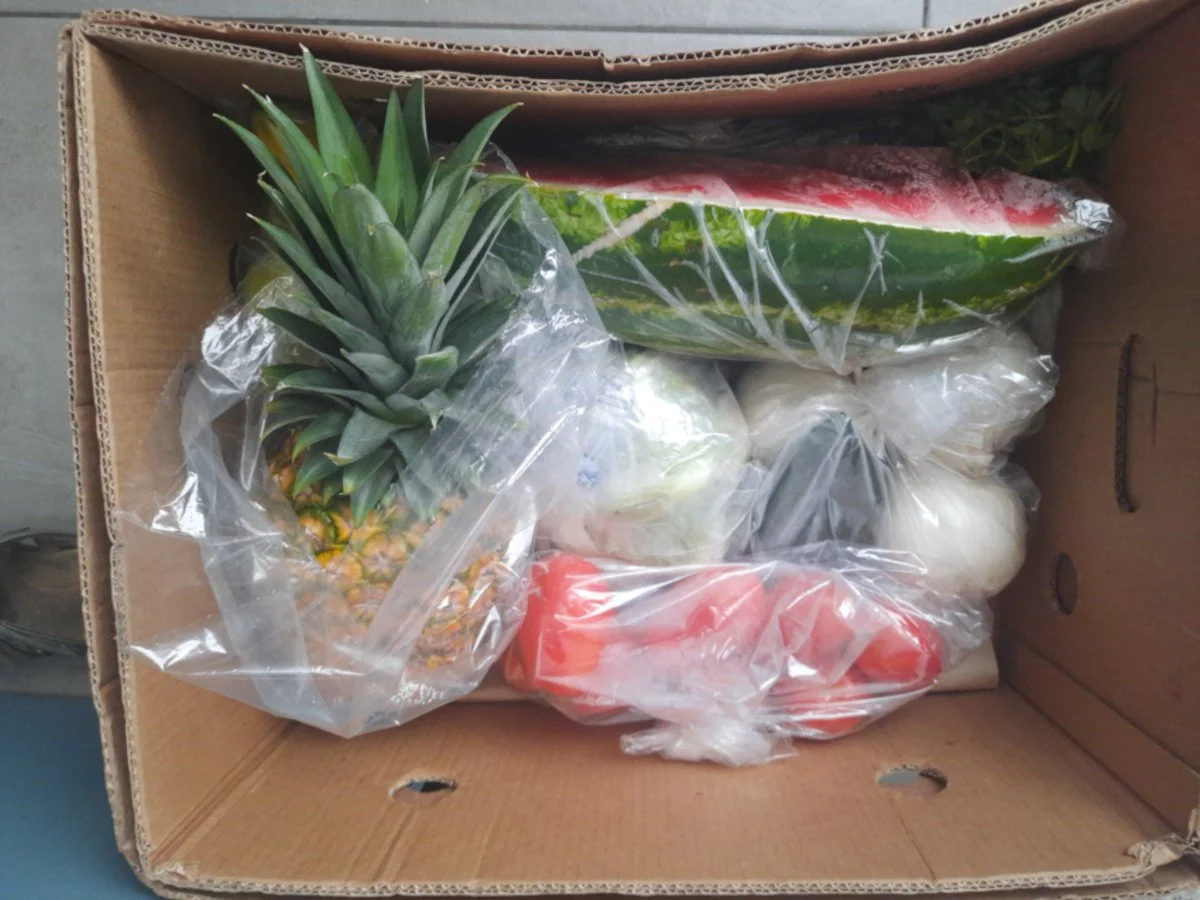
As an example, today I had produce delivered free from a local produce market. I ordered the following:
3 bananas
8 tomatoes
A bunch of parsley
A bunch of cilantro
3 carrots
½ a watermelon
3 onions
1 pineapple
2 pears
1 poblano pepper
I head of cauliflower
2 apples
The cost was 217 peso, or about $10 for the box, which was delivered within the hour on the back of a motor scooter.
Meat is much cheaper! You might eat less of it as it’s butchered and cooked differently in Mexico to accommodate Mexican cooks who use it more sparingly in family cooking. I have become a filet mignon addict since I’ve discovered I can buy them one and half inches thick for about $7 dollars each.
The chicken breasts from the open air market are gigantic, I’d be terrified if I encountered one of those chickens in a dark alley. They’re three times the size of packaged chicken breasts at home. I ask the the butcher to grind them for my Jalapeno Turkey/Chicken Burgers featured in my cookbook, The Lazy Expat: Healthy Recipes That Translate in Mexico. Four freshly ground breasts cost 200 pesos (about $10 dollars).
As a single person, I really appreciate being able to buy a half of a watermelon, papaya, pineapple and even a head of cabbage, enabling me to achieve more variety in my diet. The only produce I miss are the wide selection of hardy greens. In Mexico, it’s been limited largely to spinach, but the wide variety of cheaper fruits, avocados and tomatoes well makes up for it.
Supermarket chains versus open markets
Open air markets are the least expensive way to go. In spite of that, because of all the non-food items I need, I still end up shopping at bigger Mexican grocery stores for the big bimonthly trips, with Saturday trips to the open air markets, which are also the place to go for spices, nuts, beans and sweets by weight.
In my opinion the produce quality isn’t always better in open markets to that of larger grocery stores. You will hear the opposite in accounts from some expats, especially when it comes to organic markets. My guess is weather takes more of a toll in open markets in coastal areas like mine where certain produce can’t be kept cool as it can be in a grocery store.
Generally in Mexico you’ll need to go to more than one grocery store or alternate between a few to find everything on your list and work in an occasional trip to Walmart or Costco for imported goods.
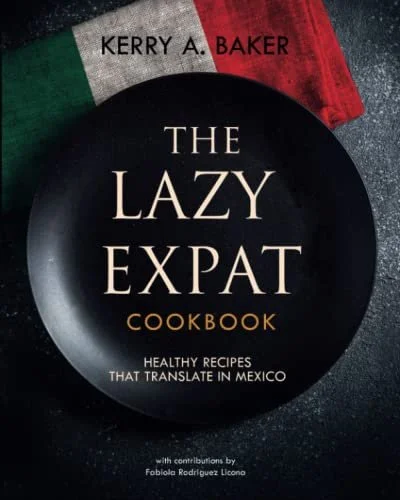
The Lazy Expat: Healthy Recipes That Translate in Mexico cookbook minimizes the trips you’ll make by using the most common staple ingredients in its recipes, which include forays into standard Mexican dishes such as pósole and tinga as well as meals American palates.
A word about washing produce
In spite of all the dire warnings about washing produce in Mexico, in my 14 years living here, I’ve never been sick in spite of my cavalier attitude about washing every tomato and mango like it was radioactive.
Not that you shouldn’t wash, of course you should! But forgetting to do so is not likely to make you sick when you buy from larger grocery stores such as Soriana, Mega, Fresco, and La Comer, the largest Mexican chains.
Americans have not built up a tolerance to certain types of bacteria. The cut fruit that the vendors sell from carts is beautiful and often delicious but foods from these carts, and seafood, is where my expats friends tend to pick up nasty intestinal disturbance. (I myself avoid these disturbances by skipping cut fruit and only snacking on things covered in chocolate).
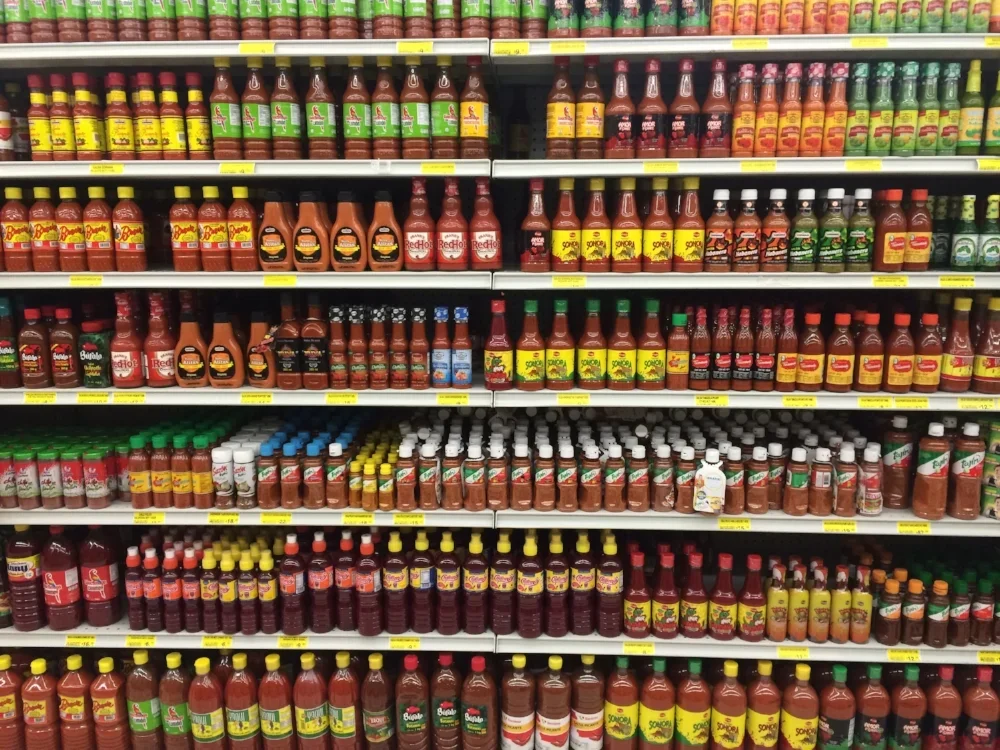
{picture right: It’s not a myth. Mexicans really do love hot sauce]
Will your diet in Mexico be healthier?
Mexico wants to help you eat healthier. As of 2021 the government requires labeling on packaging on foods that are high in fat, sugar, salt and calories. You’ll be surprised how many foods you thought of as “healthy” are decorated in these black labels, foods such as peanut butter, yogurt and bagged frozen chicken. The labeling can, however, put a damper on giving a person a box of chocolates. They are not spared.
If you are able to avoid all the fried street fare and learn how to cook with local ingredients, you can develop a healthy, inexpensive diet. The Lazy Expat, with contributions from food blogger Fabiola Rodriguez Licona and Felix Gustavo is a great place to start.
Obesity in Mexico
The level of obesity in Mexico approaches that of the U.S. Many blame soft drinks. The soda tax rejected by New York City a few years ago was implemented here in Mexico to discourage consumption several years ago.
And Mexicans consume a lot of it. More Coca-Cola is sold in Mexico than any other country in the world, leading a pack of 728 countries. Step into line in any convenience store in Mexico early in the morning and you’ll see practically every construction worker in line with his 1.75- liter bottle of Coke.
I can't deny the soft drink's power when I’m here. Years ago, people told me the original recipe for Coca-cola called for cocaine. Given how good one tastes when in the middle of one of Mazatlán's hot, humid summers, I'd be willing to believe it still does. At home, I never think of drinking it. In Mexico it’s irresistible.
In summary
As far as overall costs go, if you cook as Mexicans do and avoid imported brands, you can probably live on $400 a month for food as an individual. I've read the same figure in various forums and guides covering all parts of Mexico. You also have to consider the exchange rate. I’d be saving quite a bit more if the exchange rate right now was last year’s 20 peso rather than the present 17 pesos to the dollar.
Unlike Mexico's sunsets, pace of life and spirit, food prices in Mexico may be hard to write a song about, but they are still something to sing about (with a little help from James Taylor)
"Oh, Mexico..prices so good that you just gotta go..."
About the Author:
Kerry Baker is the author of four books.
Her most recent is “The Lazy Expat: Healthy Recipes That Translate in Mexico”, a cookbook for travelers, snowbirds and expats who want to maintain a healthy diet in Mexico (spoiler: You must cook)
If Only I Had a Place is a guide to renting in Mexico. Renting in Mexico is different, with both advantages and disadvantages to the foreigner. Choosing the right place to live can make or break your entire experience in Mexico.
The Mexico Solution: Saving your money, sanity, and quality of life through part-time life in Mexico is a how-to manual on how to set up part-time life in Mexico that will entertain while giving you a workable plan and time frame.